
The Breath-Pelvic Floor Connection
PELVIC HEALTHWELLNESSMINDFUL MOVEMENT
Jodi Bremner PT, Founder of Hervana Women's Wellness
5 min read

___________________________________________________________________________________________________
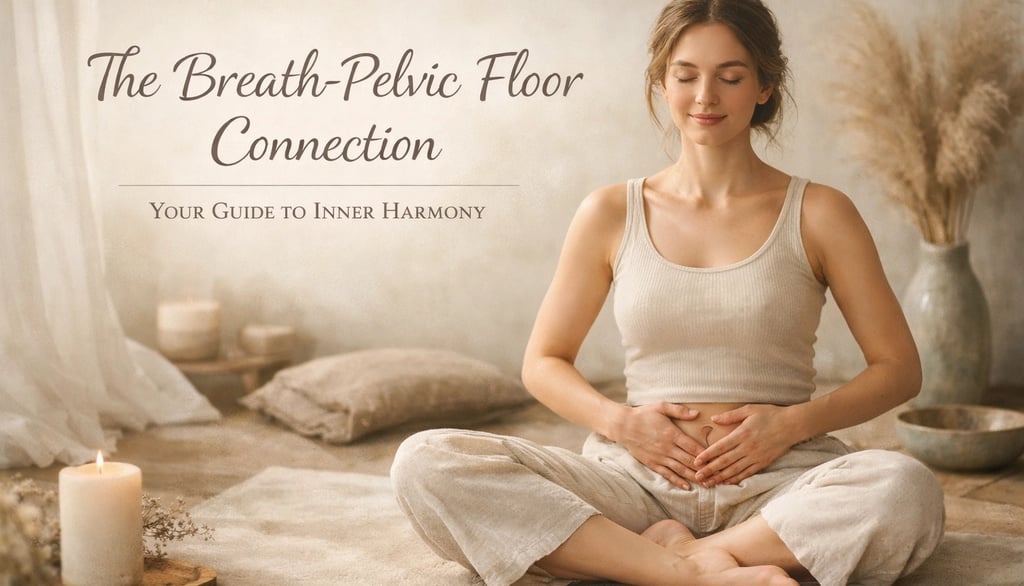
Have you ever noticed how your breath changes when you're stressed? That tightness in your chest, the shallow inhales, the feeling like you just can't quite settle?
Here's something beautiful: your breath is doing so much more than keeping you alive. It's quietly, rhythmically connecting to one of the most important (and often overlooked) parts of your body, your pelvic floor.
When we talk about finding your haven, that place of inner calm and wholeness, it starts with understanding this gentle dance between breath and body. And the good news? You already have everything you need. You just might not know it yet.
___________________________________________________________________________________________________
What Exactly Is the Breath-Pelvic Floor Connection?
Think of your core as a pressure system. At the top sits your diaphragm, that dome-shaped muscle beneath your ribs that moves every time you breathe. At the bottom? Your pelvic floor, a hammock of muscles supporting your bladder, uterus, and bowel.
These two aren't strangers. They're partners.
When you inhale deeply, your diaphragm contracts and moves downward. In response, your pelvic floor naturally relaxes and lengthens, like a soft exhale of its own. When you breathe out, your diaphragm floats back up, and your pelvic floor gently lifts and contracts.
This synchronized movement happens thousands of times a day without you even thinking about it. It's your body's built-in pressure management system, designed to keep everything balanced, supported, and flowing.
Pretty incredible, right?
___________________________________________________________________________________________________

___________________________________________________________________________________________________
When the Rhythm Gets Disrupted
Life has a way of throwing us off balance. Stress, busy schedules, sitting at desks, holding tension in our bodies, all of these can shift us into shallow, chest-dominant breathing patterns.
And when that happens? The beautiful coordination between your diaphragm and pelvic floor starts to break down.
Signs your breath-pelvic floor connection might need some love:
Feeling like you can never fully relax your belly
Pelvic pain or discomfort that seems to come and go
Bladder leaks when you sneeze, laugh, or exercise
A sense of heaviness or pressure in your pelvis
Difficulty engaging your core during movement
Chronic tension in your hips, lower back, or jaw
If any of these feel familiar, you're not alone. And more importantly, this isn't something you just have to live with.
___________________________________________________________________________________________________
The Magic of Diaphragmatic Breathing
Here's where things get exciting. By simply changing how you breathe, you can begin to restore harmony to your entire core system.
Diaphragmatic breathing, sometimes called belly breathing or 360-degree breathing, is the practice of allowing your breath to move deeply into your body, expanding your ribs outward and your belly softly forward.
It sounds simple. Because it is. But the effects? They ripple through your whole being.
___________________________________________________________________________________________________


___________________________________________________________________________________________________
5 Beautiful Benefits of Breathing Well
1. Release Tension You Didn't Know You Were Holding
When your diaphragm and pelvic floor move in sync, tight muscles begin to soften. That chronic clenching in your pelvis, hips, or lower back? It can finally start to melt away.
Deep breathing tells your body: You're safe. You can let go now.
2. Better Pressure Management
Proper breathing prevents excessive pressure from building up in your abdomen. This is especially important during activities like lifting, sneezing, running, or even just picking up your little one.
When pressure is managed well, your risk of pelvic organ prolapse and incontinence decreases. Your body knows how to protect itself: it just needs the right support.
3. A Calmer Nervous System
Here's something wonderful: diaphragmatic breathing stimulates your vagus nerve, which activates your parasympathetic nervous system: the "rest and digest" response.
This means less anxiety, lower stress hormones, and a greater sense of ease in your body. When your nervous system feels safe, your pelvic floor can truly relax.
4. Improved Core Stability
Forget the idea that core strength comes from endless crunches. True stability comes from coordination: your diaphragm, pelvic floor, and deep abdominal muscles all working together in harmony.
Diaphragmatic breathing is the foundation of this coordination. It's gentle, effective, and sustainable.
5. Greater Body Awareness
The more you practice connecting with your breath, the more you'll notice how your pelvic floor feels. You'll begin to sense when it's tight, when it's relaxed, and how it responds to different movements and emotions.
This awareness is gold: especially during seasons like pregnancy, postpartum, or menopause when your body is changing and asking for extra attention.
Your body and mind are deeply connected. When one finds ease, the other often follows.
___________________________________________________________________________________________________


___________________________________________________________________________________________________
A Simple Practice to Try Right Now
You don't need a yoga mat or a quiet room (though those are lovely). You can reconnect with your breath anywhere: in your car, at your desk, lying in bed before sleep.
Here's a gentle practice to get you started:
Find a comfortable position. Sitting or lying down, whatever feels good.
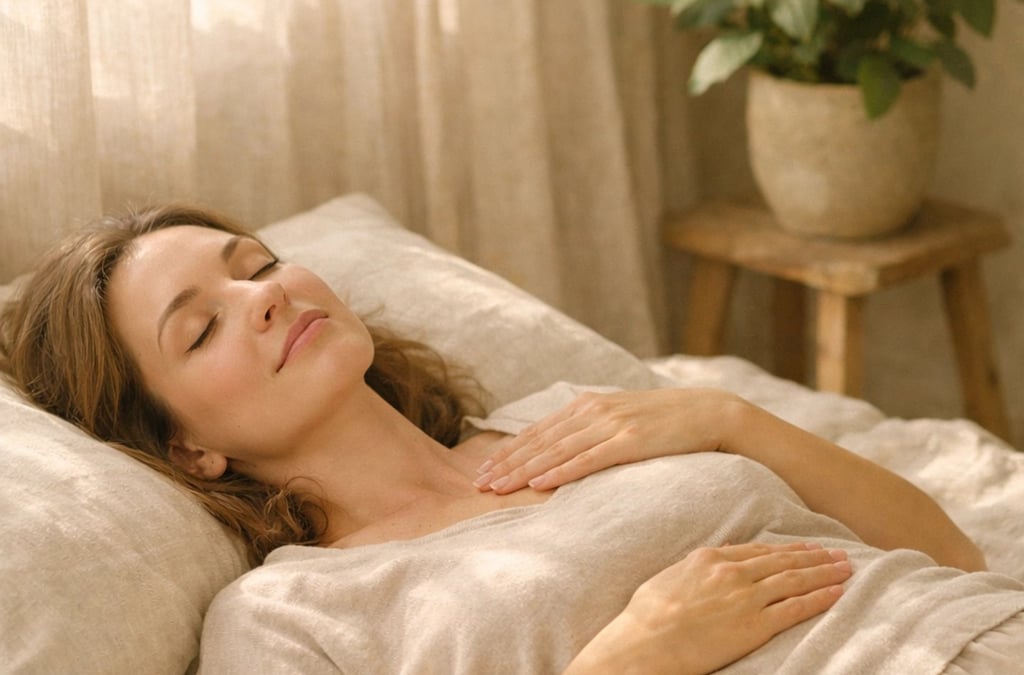
Place one hand on your chest and one on your belly. This helps you notice where your breath is moving.
Inhale slowly through your nose. Imagine your breath traveling down into your belly and expanding your ribs outward: like an umbrella opening in all directions.
Let your belly soften and rise. Your pelvic floor will naturally relax and lengthen. You might even feel a gentle release.
Exhale slowly through your mouth. Feel your ribs draw back in, your belly gently fall, and your pelvic floor lift ever so slightly.
Repeat for 5–10 breaths. No rushing. No forcing. Just being.
Try this a few times a day: especially when you notice tension creeping in. Over time, this coordinated breathing pattern will become second nature.
___________________________________________________________________________________________________
Breath as Your Daily Haven
At Hervana, we believe that healing doesn't have to be complicated. Sometimes, it starts with something as simple as a breath.
Your breath is always with you. It's your built-in tool for calming your nervous system, supporting your pelvic floor, and finding moments of peace in the chaos of daily life.
Think of each inhale as an invitation to soften. Each exhale as permission to release what no longer serves you.
This is your haven. It lives inside you.
___________________________________________________________________________________________________


___________________________________________________________________________________________________
When to Seek Extra Support
While breathing practices are powerful, they're just one piece of the puzzle. If you're experiencing persistent pelvic pain, bladder issues, or discomfort that's affecting your quality of life, it may be time to connect with a pelvic floor physiotherapist.
At Hervana Women's Wellness, we take a holistic, compassionate approach to pelvic health. We'll work with you to understand your unique body, identify patterns that might be contributing to dysfunction, and create a plan that honors where you are right now.
You don't have to figure this out alone.
___________________________________________________________________________________________________
Your Invitation
This week, I invite you to simply notice your breath. No judgment, no perfection: just curiosity.
Notice when it's shallow. Notice when it's deep. Notice how your body responds when you give it permission to breathe fully.
And remember: every breath is an opportunity to come home to yourself.
___________________________________________________________________________________________________
Have questions about your pelvic floor health or want to explore how breathwork fits into your wellness journey? Reach out to us( we'd love to walk alongside you.)
Quick Links
© 2026 Hervana Women's Wellness. All rights reserved.


Jodi Bremner PT
Follow Us
jodi@hervanawomenswellness.ca
(902) 907-4061
Services are offered in partnership with two beautiful spaces (ask to schedule with Jodi from Hervana):
Pelvic Physiotherapy
Self-Care Events & Sauna Classes
At Berwick Chiropractic Health & Wellness
188 Commercial St, Berwick, NS
(902) 538-5005 | Book Online ›
At Saltair Nordic Spa & Wellness
848 Long Beach Rd, Baxters Harbour, NS
(902) 582-2400 | connect@saltairnordic.ca
Evening Events › | Guided Sauna Classes ›